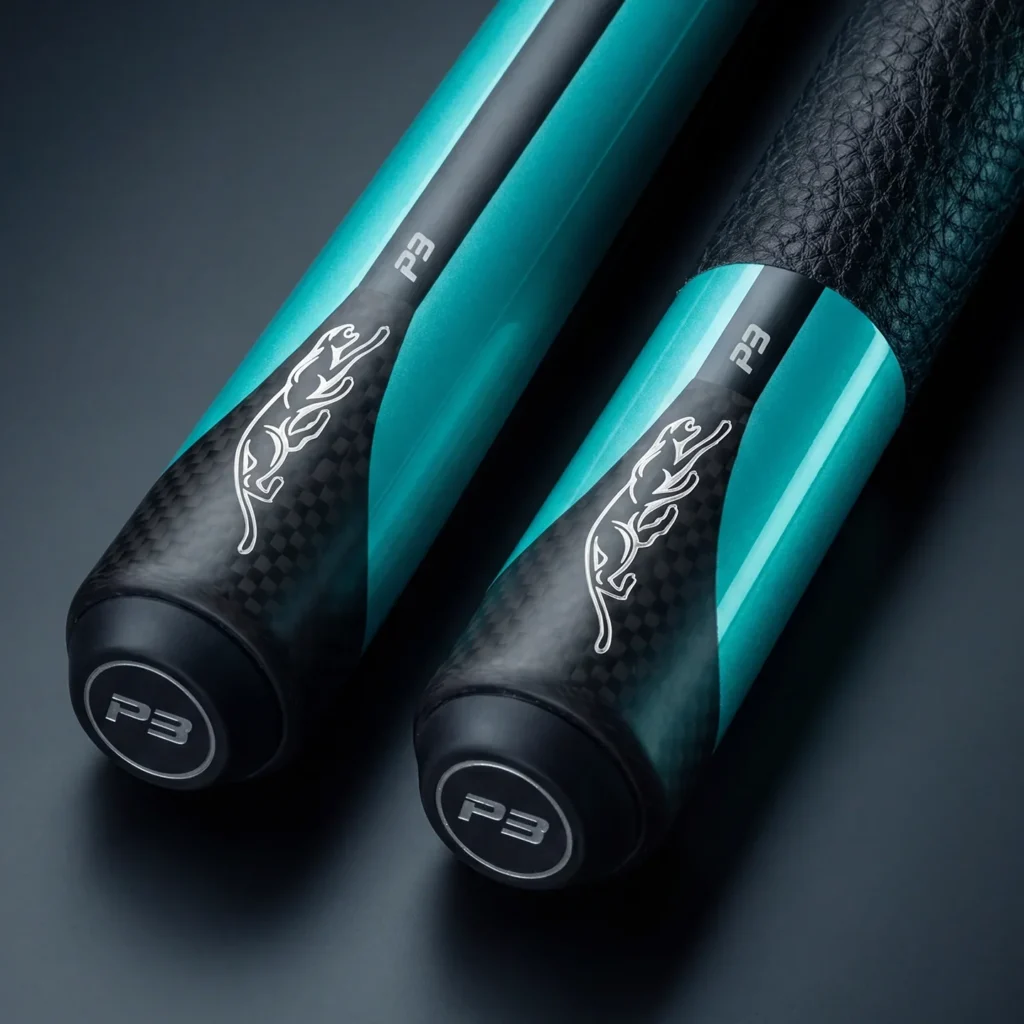
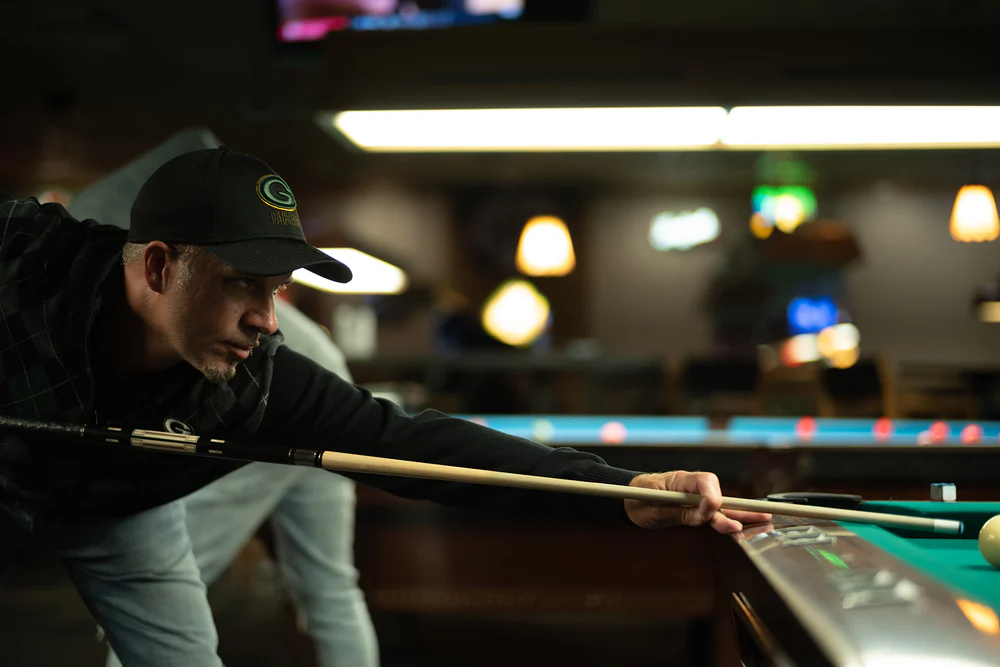
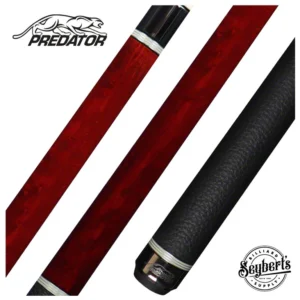
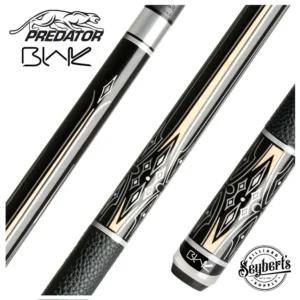
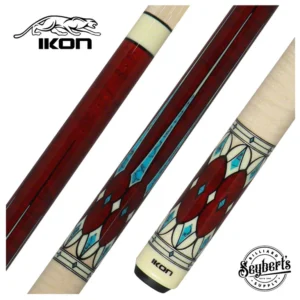
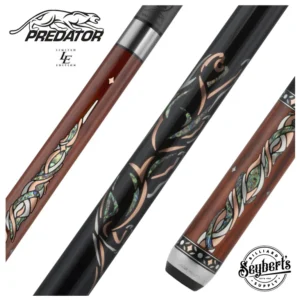
Welcome to the official Predator Pool Cues Shop. Find the world’s best low-deflection cues, carbon fiber REVO shafts, and professional gear built to maximize your accuracy.
SHOP NOW
Predator Pool Cues: The Definitive Guide to Science, Technology, and Performance in Modern Billiards
Every pocket billiards player reaches a turning point where standard equipment fails to keep pace with their growing skills. When a game relies on millimeter-level accuracy, equipment engineering becomes just as critical as your physical technique. This is where predator pool cues have completely transformed the sport. By replacing traditional building methods with pure physics and material science, these cues have set the baseline for what a high-performance piece of billiard gear should be.
For decades, players had to manually adjust for side-deflection (squirt) whenever they used spin. The engineering team at Predator Group changed that paradigm by introducing the low-deflection shaft. This innovation drastically cuts down the learning curve for applying spin and brings unparalleled consistency to positional play. If you want to see our full line of gear or learn more about our company mission, check out the Predator Cues Official Site or visit our Predator Cues Home Page to view the latest collections.
What sets Predator pool cues apart from traditional billiard cues?
Predator pool cues are distinct because of their advanced low-deflection engineering. While traditional wooden shafts bend significantly upon off-center hits—pushing the cue ball off its target line—Predator cues minimize this front-end mass using bored-out wood cores or aerospace-grade carbon fiber composites (REVO shafts). This technical design dramatically reduces cue ball squirt, allowing players to aim directly at their target without complex physical compensation when applying English (sidespin).
The Core Problem: Understanding Cue Ball Deflection
To truly understand why predator pool cues are highly regarded by professional players worldwide, you first have to understand the fundamental physics problem every pool player faces: cue ball deflection, also known as “squirt.”
The Physics of Squirt
When you strike a cue ball precisely in the center, all forward energy pushes through its center of gravity. The ball travels exactly along your physical aiming line. However, the game becomes much more dynamic when you apply sidespin (English) to maneuver the ball around the table for positional play.
When you strike the cue ball on its right side to generate right-hand spin, two primary physical forces interact:
-
The tip pushes the ball forward.
-
The mass of the shaft tip resists the ball, causing the shaft to glance outward while pushing the cue ball slightly to the left.
This leftward deviation from your actual physical aiming line is what we call deflection or squirt. For over a century, players had to spend thousands of hours building muscle memory just to compensate for this variance. They had to aim slightly to the left or right of their true target, adjusting their point of aim based on how hard they struck the ball and how much spin they applied.
How Front-End Mass Influences Deflection
The magnitude of this deflection is directly tied to the mass of the front first 5 inches of the pool cue shaft. A heavier shaft tip possesses greater inertia. When it strikes the cue ball off-center, the heavy wood tip forces the ball to displace sideways.
By systematically minimizing the weight at the front end of the shaft, you reduce the physical force pushing the cue ball off its line. This realization is the cornerstone of all development across the entire line of predator pool cues.
Low-Deflection Shaft Evolution
The journey toward modern low-deflection technology began in the mid-1990s with a dedicated focus on re-engineering the wood pool cue shaft. Rather than treating a pool cue as a simple turned piece of maple, the design team approached it as an advanced mechanical structure.
The Original 314 and Z Shaft Designs
The introduction of the original 314 shaft changed the billiard industry overnight. Predator achieved low-deflection performance through a distinct pie-slice splicing method:
-
Spliced Construction: Instead of using a single solid piece of wood, which can have natural grain variances and structural inconsistencies, Predator sliced premium hard rock maple into 10 or 12 individual radial wedges. These wedges were then glued together to form a perfectly balanced, hollowed-out tube.
-
Internal Boring: The engineering team hollowed out the front portion of the shaft, removing dense wood mass and replacing it with ultra-light aerospace foam insulation.
-
Conical vs. Pro Taper: This process led to two distinct player options: the 314 shaft, which features a traditional pro taper preferred by players who like a familiar feel, and the Z shaft, which features a quicker, conical taper for players demanding the absolute lowest front-end mass possible.
Every single component within our product lineup is built with performance in mind. When you invest in premium equipment, you are buying a highly calibrated system where the shaft, joint, and butt work together to optimize energy transfer. To explore our full product range and see these features firsthand, you can visit our dedicated Predator Cues Shop.
1. The Vault Plate and Ferruleless Construction
Traditional pool cues feature a plastic or phenolic ferrule designed to cushion the wood from direct impact stresses. However, ferrules add significant weight exactly where you don’t want it: at the very tip of the shaft.
On the REVO series, the traditional ferrule is replaced by a patented Vault Plate. This thin, ultra-rigid internal plate distributes impact forces evenly across the carbon fiber walls, allowing the tip to be glued directly to the front of the shaft assembly. Removing the heavy ferrule significantly lowers front-end mass, giving you pristine accuracy on deep inside-spin shots.
2. Uni-Loc Quick Release Joint Technology
A pool cue is only as stable as the connection point holding its two halves together. Standard screw joints require multiple turns to lock together, and their threads can wear down or shift over time.
The Uni-Loc Quick Release Joint solves this problem by pulling the shaft and butt together with perfect alignment in a single turn. Machined to tolerances within thousands of an inch, this joint ensures that energy waves travel through the connection without any dampening or clicking. It gives a two-piece cue the solid feel of a single, continuous piece of wood.
3. C4+ Butt Construction
While the shaft dictates deflection, the butt of the cue governs stability, straightness, and torsional stiffness. Traditional cue butts use a solid piece of wood bored out down the center to accept a weight bolt, making them prone to shifting with seasonal weather changes.
The C4+ Butt Construction solves this issue by utilizing four separate wedges of premium hardwood layered around an ultra-strong core of maple. This four-piece core resists warping and guarantees that the cue remains perfectly straight, no matter how humid or dry the room gets.
4. Uni-Loc Weight Cartridge System
No two pool players share the exact same physical build or stroke mechanic. A cue weight that feels natural for a power-finesse player might feel cumbersome to a player focused on precise rotation geometry.
Our integrated Uni-Loc Weight Cartridge System lets you fine-tune the total weight and balance point of your cue down to 0.1-ounce increments. By accessing the threaded channel under the bumper, you can swap out lightweight aluminum or heavy steel inserts. This allows you to shift the balance point forward or backward to match your exact stroke preferences.
Choosing the Right Shaft Diameter for Your Stroke
Selecting a tip diameter is more than just a comfort choice; it fundamentally alters the contact physics between your tip and the cue ball.
The 11.8mm Category
A narrower tip allows you to apply dramatic spin without moving your hand far from the center axis. This makes it an exceptional tool for tight safety play and position control in games like 9-ball or 10-ball. However, because the contact area is smaller, a slight error in your stroke can lead to an unintended miscue.
The 12.4mm Balanced Standard
This diameter has become the modern benchmark for competitive players worldwide. It offers a generous surface area for center-ball strikes while remaining agile enough to generate deep draw and follow shots when needed.
The 12.9mm Power Variant
A larger tip provides a sturdy, forgiving surface for players with a heavy forward stroke. It offers excellent feedback on high-speed break shots and long straight-in shots, ensuring the tip doesn’t drift off your intended striking point.
Step-by-Step Guide to Maintaining High-Performance Equipment
High-performance gear requires routine maintenance to keep it performing at its peak. Use the following procedure to protect your investment over years of league play.
1.Clean the Exterior Surface:Perform every 5-10 sessions.
For carbon fiber REVO shafts, use an isopropyl alcohol wipe (75% or higher) to clean the surface of chalk residue and hand oils. If you are using a spliced wood shaft, use a damp microfiber cloth instead, and dry it immediately to avoid warping.
2.Condition and Scuff the Leather Tip:Before competitive matches.
Use a dedicated tip tool to gently scuff the surface leather. This opens up the pores of the leather, allowing pool chalk to adhere evenly across the dome rather than sliding off.
3.Inspect the Joint Threads:Monthly checkup.
Wipe down the Uni-Loc pin using a dry cotton swab to clear out packed chalk dust. Debris in the quick-release threads can cause binding and ruin the precise alignment over time.
4.Verify Tip Radius Using a Gauge:Every 30 days.
Place a tip radius gauge over your cue leather to ensure it maintains a proper curvature (matching the arc of a nickel or dime). If the tip has flattened out from repeated impact, use a tip shaper to restore its correct curve.
Why Professional Billiard Athletes Choose Predator
Walk into any major international tournament—from the World Pool Championship to the Mosconi Cup—and you will see our signature cat logo on the equipment of top-tier touring professionals.
Professional players choose this equipment because it eliminates variables. When a match depends on a single shot across a 9-foot table, you cannot afford to guess how the wood will react to a humid TV arena or cold tournament floor. Carbon fiber and C4+ construction provide identical feedback and hit characteristics whether you are playing in Las Vegas, London, or Tokyo.
Frequently Asked Questions
Yes. We manufacture shafts with various joint configurations, including the Uni-Loc Radial, 5/16×14, 5/16×18, and 3/8×10. This allows you to pair our industry-leading shaft technology with almost any high-quality cue butt on the market.
Unlike wood shafts, which naturally soften and change their feel over months of play, carbon fiber retains its structural properties indefinitely. The break-in period is purely psychological as your hand adjusts to the smooth finish and distinct sound feedback of the composite material.
It depends entirely on your weekly play hours and tip maintenance habits. Generally, a tip should be replaced when the leather thickness drops below 2 millimeters, or if you notice the layers beginning to delaminate under impact.
Elevate Your Game
Investing in top-tier billiard gear changes your entire approach to the table. By removing the need to compensate for deflection, you free up mental energy to focus on strategy, pattern play, and potting balls with absolute confidence.
If you are ready to experience this level of precision for yourself, read about our brand heritage on our About Us Page or connect directly with our technical support team through our Contact Us Page. We are here to help you select the exact configuration that will transform your performance on the table.
WHY CHOOSE PREDATOR POOL CUES
When shopping for premium billiard equipment, the most important question every serious player asks is: why choose predator pool cues? The answer lies in engineering, precision, and performance. When you invest in predator pool cues, you are not just buying a piece of wood or carbon fiber; you are choosing the most technologically advanced equipment on the market. There are many reasons why players worldwide consistently select predator pool cues over any other brand.
First and foremost, when you opt for predator pool cues, you get unmatched low-deflection technology. Traditional cues cause the cue ball to drift off-target when you apply sidespin, but predator pool cues minimize this front-end mass to ensure your ball goes exactly where you aim. This advanced design means that selecting predator pool cues instantly removes the frustrating guesswork from your game. This pristine accuracy is exactly why choose predator pool cues becomes an easy decision for competitive players.
The Engineering Advantage
The engineering behind predator pool cues sets them completely apart from traditional manufacturers. Here is why the materials matter:
-
Aerospace Carbon Fiber: Modern predator pool cues feature REVO shafts, which are warp-resistant and incredibly smooth.
-
C4+ Core Construction: The butt of all premium predator pool cues relies on a four-piece core that ensures your cue stays perfectly straight over time.
-
Uni-Loc Joints: Choosing predator pool cues means you get a joint system that aligns the shaft and butt perfectly with a single turn.